



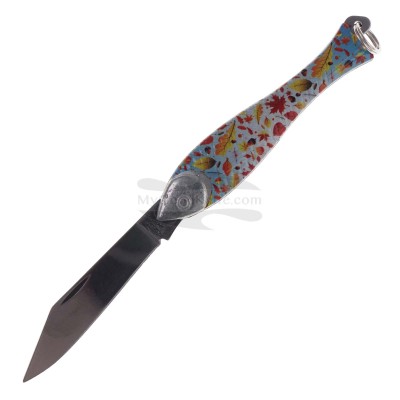


Folding knife Mikov Rybička Leaves 130-NZn-1-LIST 5.5cm
-
Quick shippingWe ship worldwide! If order is placed on business day before 12-00 at Finnish time, we will do our best to ship it on the same day.
-
Easy paymentMyGoodKnife offers several payment options for your purchase: credit card or direct payment to bank account.
-
Secure shoppingMyGoodKnife is secured with SSL (Secure Socket Layer) certificate. Our webshop is encrypted with 128-bit SSL protection. When you move to the payment pages, your payment transaction is completely secure!
-
Customers supportContact our customer service via live chat, e-mail or contact form. We do our best to answer all requests in nearest time.
-
Return & RefundEU customers have the right to cancel order within 14 working days of delivery and return goods for a full refund (except cost of shipment).The goods must be return in saleable (unused) condition including package.
The Rybička is a classic version of the famous Czech Mikov folding knife, featuring a handle adorned with a leaf motif. This model has been produced in the Czech Republic for over a hundred years. The knife features a 420 stainless steel blade. Its compact size allows you to carry it in your pocket or bag without even noticing it. Today, the Rybička is not only a legend of Czech knifemaking but also a convenient EDC knife. The knife is manufactured by Mikov in the Czech Republic and bears the "Regional Product" seal, confirming its authenticity.
The Mikov brand is one of the oldest and most respected knife manufacturers in the Czech Republic, with a history dating back to 1794. Initially, the manufactory in the town of Nixdorf (now Mikulášovice) specialized in the production of handicraft cutlery and tools. But at the beginning of the 19th century, the quality of the products improved significantly with the arrival of the experienced blacksmith Anton Weber, and by 1819 the factory received noble status and the right to brand its products with the Austrian eagle for high quality. Geopolitical changes in the 20th century, including the collapse of Austria-Hungary and the formation of Czechoslovakia, of course, affected production. During the Nazi occupation, the factories came under the control of German specialists, but after the war they were nationalized and merged. In 1955, a key event occurred: several companies united into the Mikov brand (short for Mikulášovice Metal Industry), which preserved the traditions of quality and began mass production of knives, including iconic models.