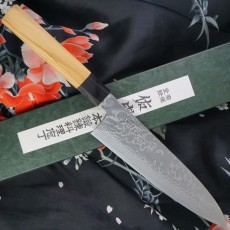
The Sukenari S-1007 Kiritsuke Gyuto combines the versatility of a *gyuto* (chef’s knife) with the distinctive profile of a *kiritsuke*. Its 210 mm blade, featuring a sharp, pointed tip, is well-suited for the precise slicing of vegetables, fish, and meat, as well as for delicate culinary tasks. The blade is crafted from multi-layered steel with a core of ZDP-247—a high-carbon Japanese tool steel—and boasts a hardness of 61–63 HRC. It features a traditional Japanese-style (*wa*) handle made of olive wood, accented by a buffalo horn bolster. This knife requires careful handling: it must not be cleaned in a dishwasher, nor should it be used for chopping bones or cutting through hard food items. The blade must be wiped completely dry after each use.
The Sukenari chef’s knife, featuring a 210 mm blade, is a versatile tool designed for precise and comfortable kitchen work. As a Japanese *gyuto* (chef’s knife), it differs from a classic European chef’s knife by being thinner, lighter, and exceptionally sharp. This geometry ensures clean cuts, allowing you to slice meat, fish, vegetables, and herbs with minimal effort. The blade is crafted from multi-layered steel with a core of ZDP-247—a high-quality Japanese tool steel produced by Hitachi Metals (now Proterial). With a hardness of 61–63 HRC, the blade offers superior edge retention and high wear resistance. A unique Damascus pattern makes every knife one-of-a-kind. While the steel possesses good corrosion resistance, the knife requires careful maintenance: it should be wiped completely dry after each use. A traditional Japanese *wa*-style handle, made from olive wood with a buffalo horn bolster, highlights the knife’s classic character. This knife must not be cleaned in a dishwasher, nor should it be used to cut hard items such as bones, coconut shells, or hard nuts.
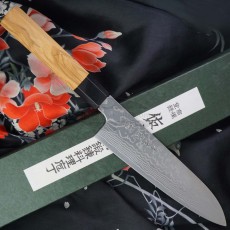
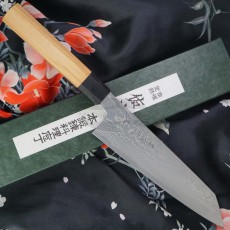
Sukenari Santoku with a 195 mm blade. Given its length, this knife can serve as a full-fledged replacement for a standard chef’s knife. The blade is crafted from multi-layered ZDP-247 steel—a high-carbon Japanese tool steel produced by Hitachi Metals (now Proterial)—with a hardness of approximately 61–63 HRC. While the steel offers good corrosion resistance, the knife still requires proper care and should not be left wet. It features a *wa*-style (traditional Japanese) handle made of olive wood, accented by a buffalo horn bolster. This Sukenari Santoku is an excellent choice, even for the most discerning enthusiasts. Sukenari Japanese knives must not be cleaned in a dishwasher. They should not be used on hard materials (such as meat with bones, coconut shells, or other hard-shelled nuts).
€390.44
In stock
This site uses cookies. By continuing to browse the site you are agreeing to our use of cookies. Find out more here.