Paracord is a durable and versatile cord widely used today in hiking and EDC. In this article, we'll explain what paracord is, the different types available, and its uses.
The History of Paracord
Paracord is a type of parachute cord whose history began during World War II. It was used as slings for American parachutes. Paratroopers quickly realized that these strong, yet flexible and lightweight cords could be used in the field for countless tasks—from repairing gear to building shelters. After the war, paracord entered the civilian sector and was quickly embraced by hikers, hunters, and survivalists. The phenomenon of paracord's popularity is based on its strength, versatility, and affordability.
It is compact and lightweight, yet can withstand enormous loads. Inside classic paracord are several strong nylon strands. These strands not only make the cord extremely durable but can also be used individually. Paracord is waterproof, rot-resistant, tear-resistant, fade-resistant, and UV-resistant. It is easy to carry, not only as a coil of rope but also as an EDC accessory. For example, paracord can be used to weave a bracelet or knife lanyard, and when you need the cord, you can simply unravel the accessory.
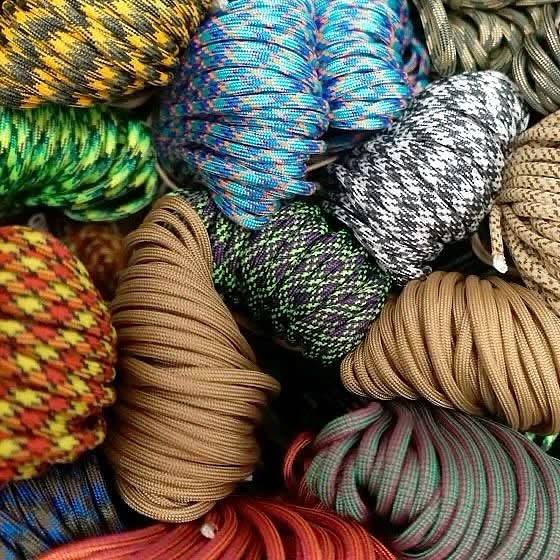
Types of Paracord
Today, there are several main types of paracord, differing in thickness, the number of internal strands, and their intended use.
Paracord 550, or Type III, is the most well-known and widespread type. Its name comes from its ability to withstand a load of up to 550 pounds (approximately 250 kg). It is 4 mm thick and contains seven nylon strands. 550 paracord is the most versatile type of cord, used for making bracelets, tent guy lines, repairing gear, and much more.
BattleCord is a reinforced paracord designed for particularly heavy-duty applications. It is an ultra-strong, coreless cord with a diameter of approximately 6 mm. It can withstand a load of up to 2,650 pounds (1,200 kg) and can be used to secure bulky loads or suspend heavy objects. Paracord 275, 425, and 95 are lightweight options for everyday tasks, crafts, and securing small items.
There are also non-standard varieties of paracord. For example, Bungee Cord (elastic cord) with a built-in elastic thread. It can stretch to twice its original length. Reflective and Glow-in-the-Dark paracord are also very popular among hikers. They can be used to mark gear and easily find it in the dark. There are also color-changing paracord options that react to sunlight, UV radiation, or light, changing their hue. Color-changing paracord is typically used to make decorative accessories. It's important to remember that household and non-specialized paracords cannot be used for mountaineering. Specific, specialized types of rope are used for rock climbing.

Top Paracord Brands
There are several leaders in the modern paracord market producing high-quality paracord. One of the most well-known brands is Atwood Rope MFG. This American company specializes in high-strength cords for military and professional use. They are a US government contractor manufacturing rope and military cords. Atwood Rope offers dozens of types of paracord, including BattleCord, 550 Paracord, Micro-cord, and tactical series. The company sets many standards for paracord types and colors, which other manufacturers follow.
Another notable paracord manufacturer is Marbles, a brand known for its affordability and wide selection. Marbles paracord is popular among hikers and outdoor enthusiasts who need a good cord at a reasonable price.
What is paracord used for?
In hiking and outdoor activities, paracord is an indispensable tool for everyday life and even survival tasks. When setting up camp, it can be used as a guy line for an awning or tent, or for hanging a hammock or gear. Paracord can be woven into a durable net that can be used to secure cargo, as a fishing net, or as a hammock. The inner strands of paracord can be used to sew clothing and backpacks and as fishing line. In an emergency, paracord can be used to construct a stretcher or as a temporary tourniquet for a wound. In other words, it's a versatile cord that can be used for marking, transporting, securing, and much more.
In the city, paracord also remains useful: it's used to make shoelaces, knife and flashlight lanyards, keychains, decorative braids, fasteners, leashes and collars, and much, much more.

At the MyGoodKnife store, you can buy paracord in a variety of colors and types. We'll come back to discuss this super-cord later and tell you how to weave paracord bracelets and make useful accessories from it.
*The article uses AI-generated photos.



 Christmas vacation 23.-28.12Read more
 Paracord: What It Is and How to Use ItRead more
 Can You Give Knives as a Gift: Traditions, Superstitions, and AdviceRead more
 How to Sharpen Japanese Knives – A Complete Guide to Care and MaintenanceRead more
 Delivery to USARead more