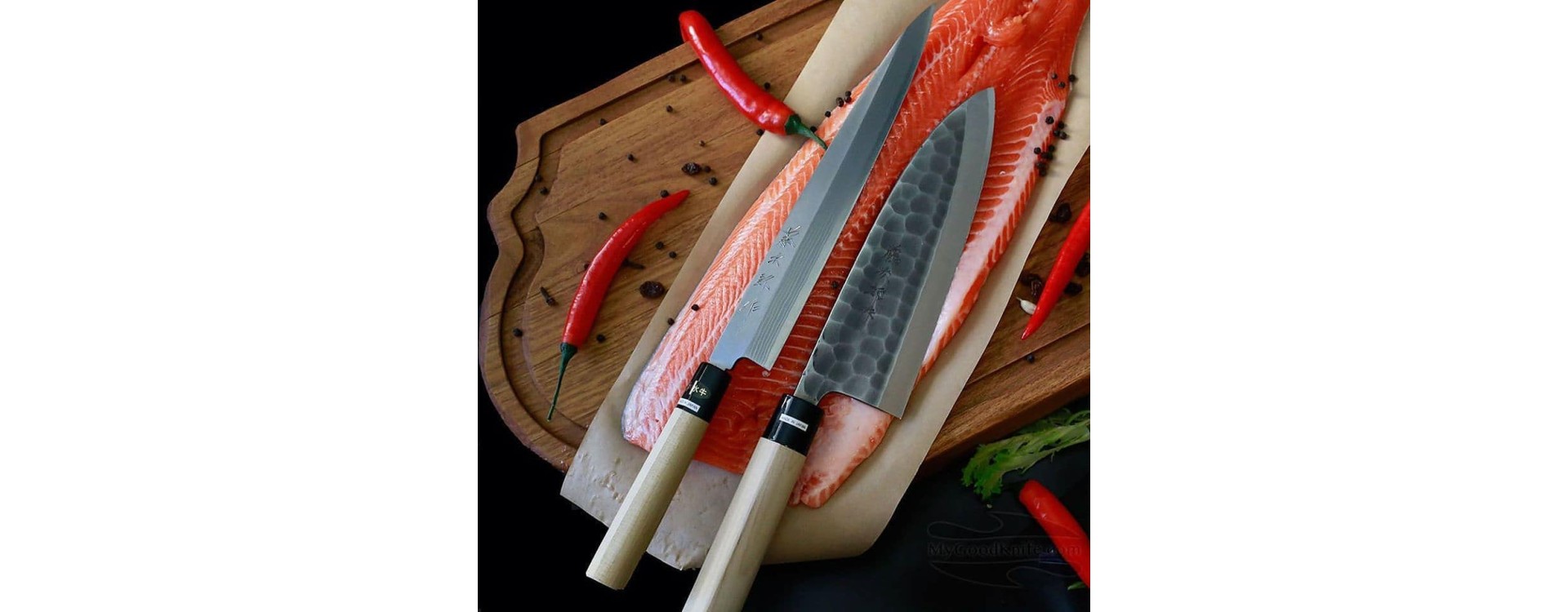
Japanese knives are different from Western kitchen knives and require special care. This is because Japanese kitchen knives have a different angle and a thinner cutting edge, so regular sharpeners are not suitable for them. How to sharpen Japanese kitchen knives and care for them - we will tell you in our material.
How to sharpen Japanese knives? Sharpening on whetstones.
The first thing you need to know is that the sharpening angle of Japanese models is usually 10-15 °, while Western ones are 20-25 °. The most suitable way to sharpen Japanese knives is to use whetstones. They come in different grain sizes: coarse (200-800 grit) for restoring very dull blades, medium (1000-3000 grit) for basic sharpening, and 5000-8000 grit for polishing and finishing sharpening. In our store you can buy double-sided whetstones, one side of which is 220 and the other is 1000 grit. There are also models of 1000/6000 and 3000/8000 grit.
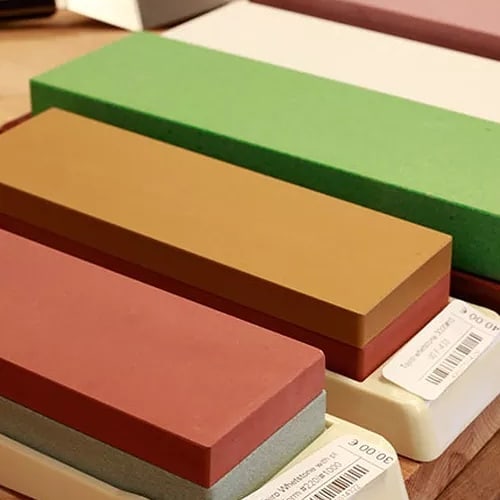
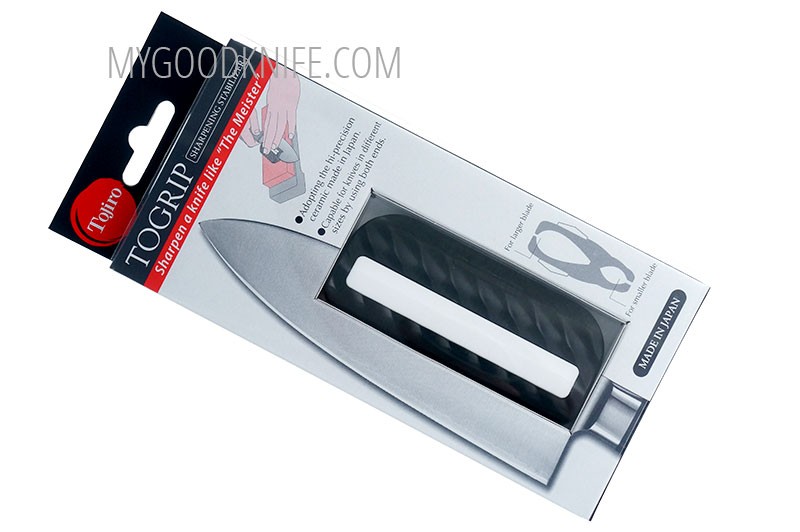
If you do not allow the knives to become very dull, one whetstone of 1000/6000 grit will allow you to constantly maintain the cutting edge of a Japanese knife in good condition. However, sharpening knives on whetstones is a fascinating and meditative activity. Having bought one stone, many people begin to get carried away by the process and delve more into the sharpening technology. Before sharpening, the whetstone should be soaked in clean water for 10-15 minutes. The stone should be completely saturated with moisture to avoid overheating the edge and ensure smooth sliding of the blade. The work place should be stable, and the stone should be fixed on the holder. For Japanese knives, it is very important to maintain the correct angle - usually from 10 ° to 15 °. For beginners, we recommend using the Tojiro or Naniwa angle holders.
If the knife is double-bevel (ryoba), start with one side of the blade, moving it along the stone from the heel to the tip with smooth movements, evenly distributing the pressure. If the knife is single-bevel (kataba, for example, yanagiba), then first work the working side with a large angle, and then the back with a minimum. After the correct angle has been formed and the burr has been removed, move on to medium and fine-grained stones. Medium-grained stones smooth out the edge, while fine-grained stones create a razor-sharp finish. The movements on the finishing stones should be light, without applying much pressure.
After sharpening, the knife should be rinsed in warm water and thoroughly wiped dry. This is especially important for carbon steels (Shirogami, Aogami), which rust quickly. The stones should also be rinsed, dried and put away in a dry place for storage.
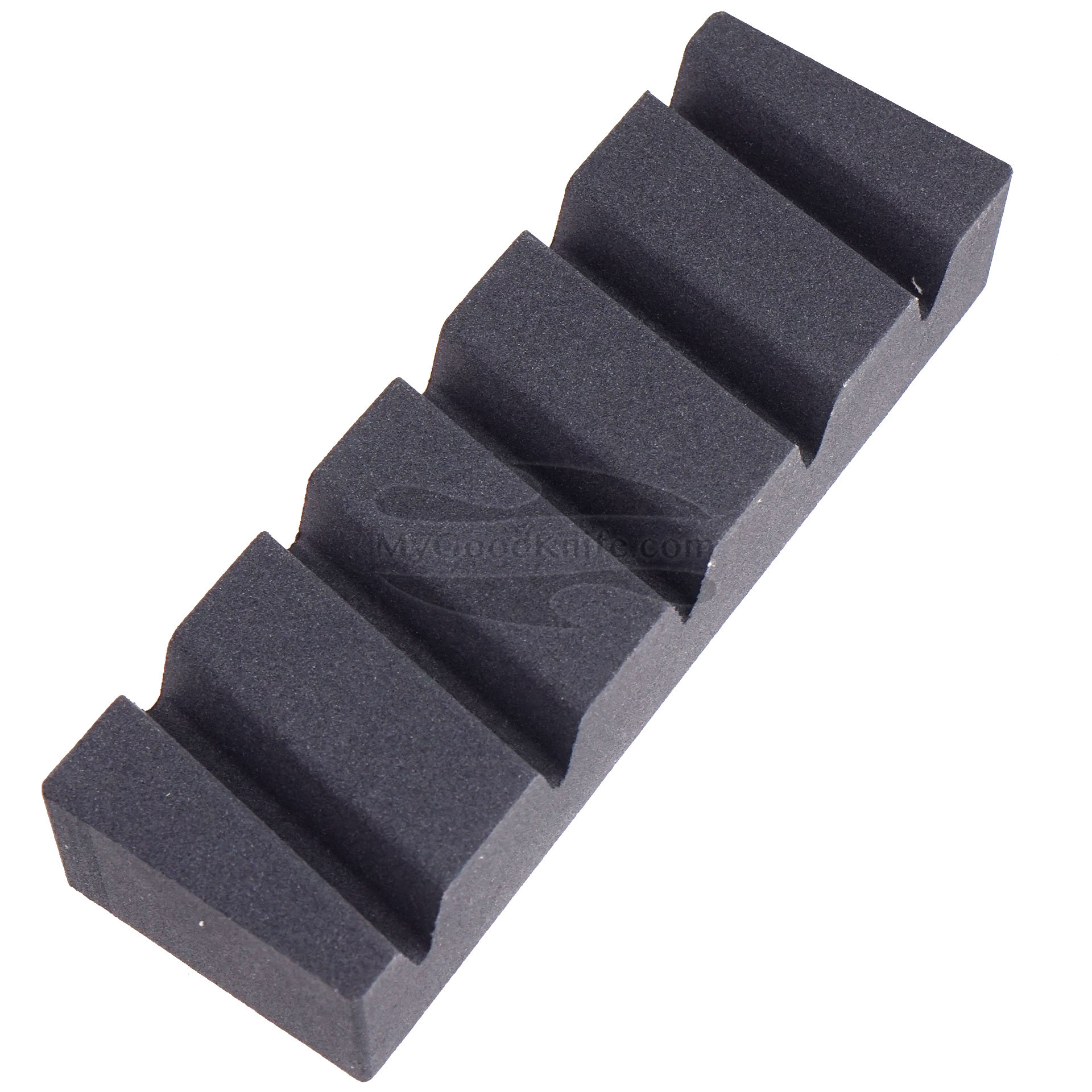
It is important to remember that the surface of a water sharpening stone wears down and deforms during operation. To keep it smooth and flat, use special leveling stones. For example, Naniwa Flattening stone 220 A-102.
To maintain the sharpness of a Japanese knife between whetstone sharpenings, ceramic bars are suitable, for example. You can also use sharpeners in which it is possible to change the angle in the system. Regular roller sharpeners cannot be used for Japanese kitchen knives.
Japanese kitchen knives maintenance
To keep your knives sharp longer, it is recommended to use wooden or plastic boards that do not dull the cutting edge. You can store your knives in special wooden sheaths called saya. If you do not have a saya suitable for your knife and you have not found one in our assortment, you still need to store your Japanese knife so that the cutting edge does not come into contact with other objects. For example, you can store it on a wall magnet for kitchen knives or in a special stand. If the knife is just lying around in a drawer, it will definitely become dull, and someone may accidentally cut themselves.
The main thing to remember is that Japanese kitchen knives have a very hard and thin cutting edge. Therefore, they should never be used to cut hard foods (frozen meat, bones, etc.). This can lead to chipping of a piece of the cutting edge. A good sharpener could hypothetically fix this, but the geometry of the knife and the cutting edge would no longer be the same.
Since most Japanese kitchen knives are made of high-carbon steel, they are susceptible to corrosion. To protect the knife from rust, it must be washed and wiped dry immediately after use. To avoid corrosion, lubricate the blades with camellia oil.
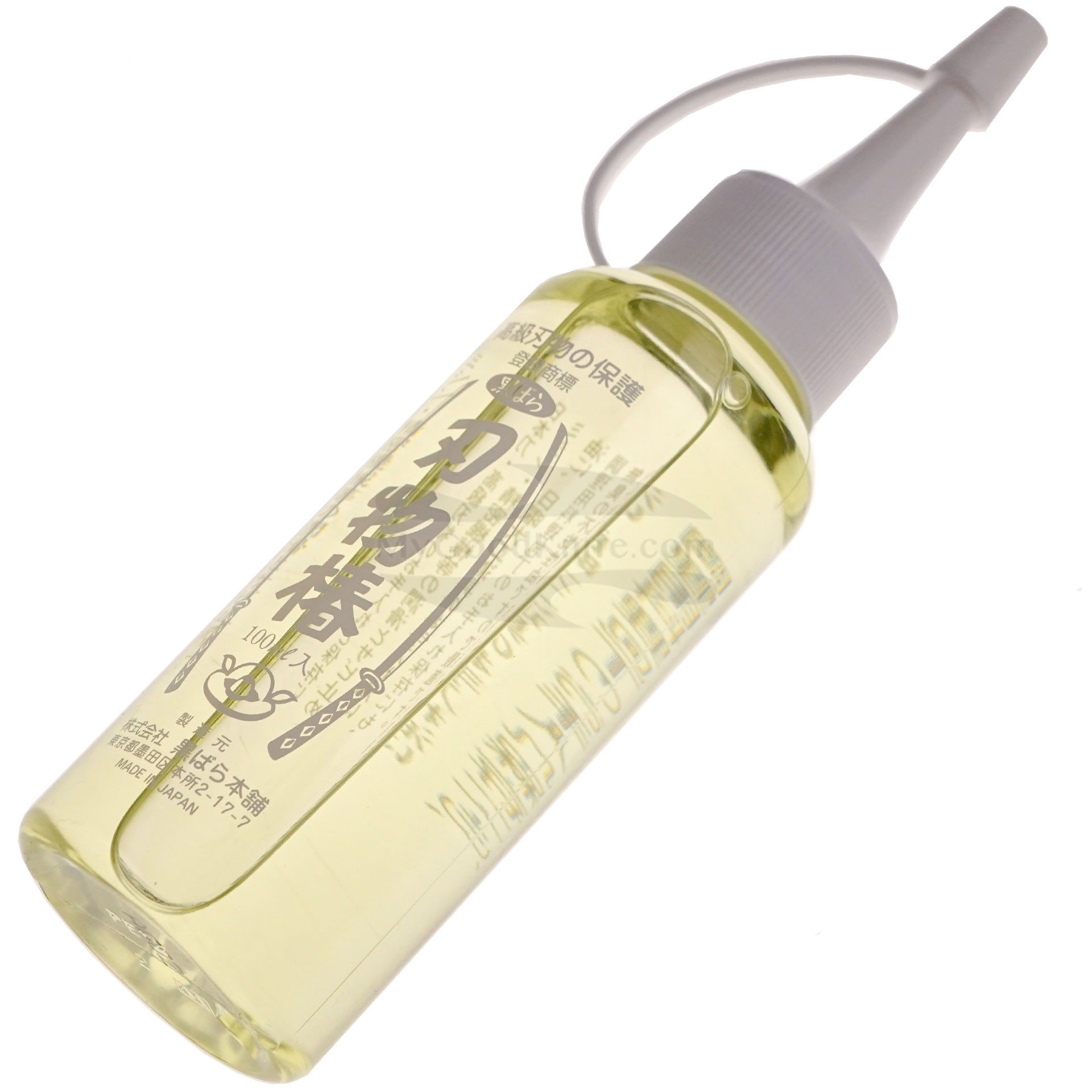
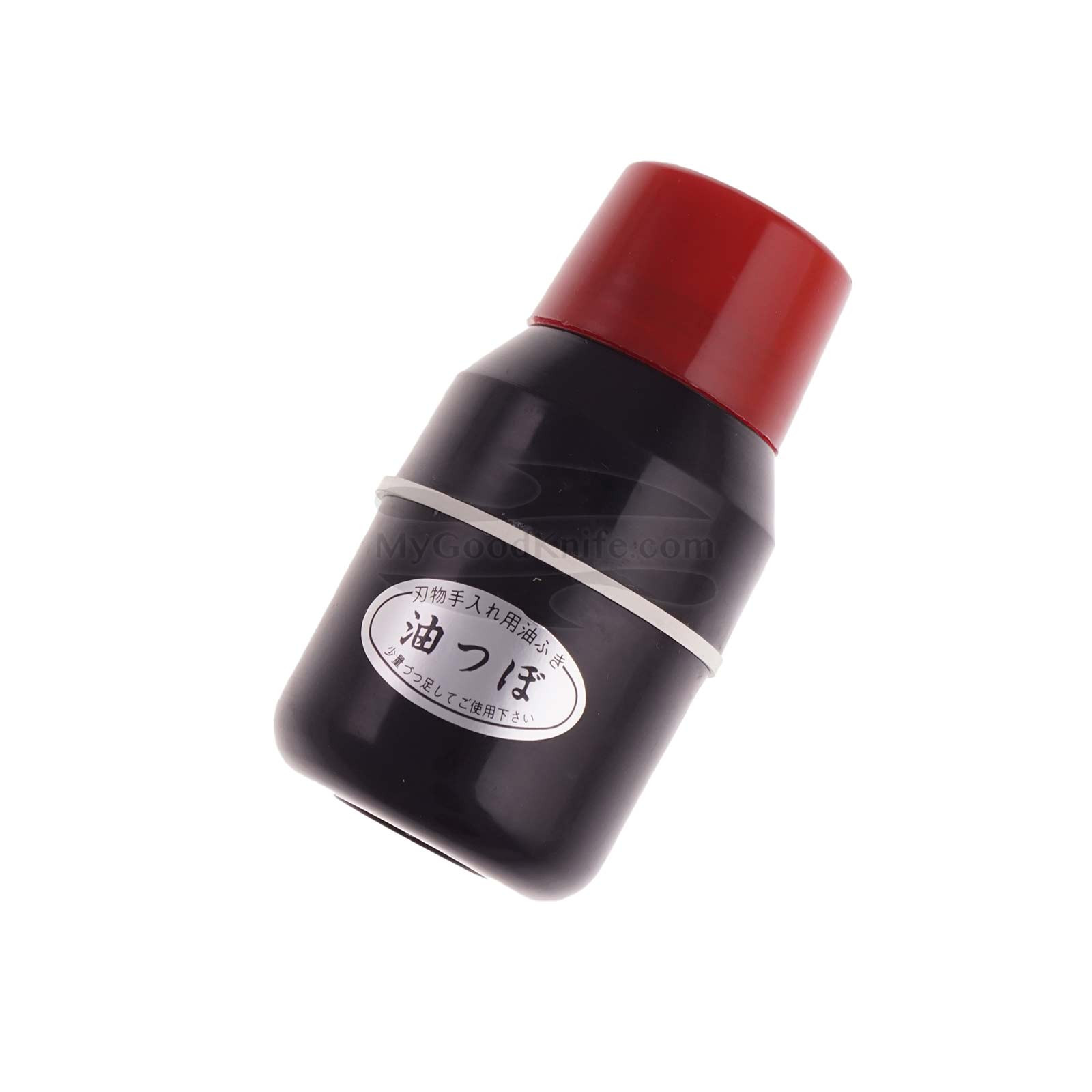
It fills the microscopic cracks in the blade structure and prevents the oxidation process. Camellia oil is absolutely safe when in contact with food, meets hygiene standards, and has no taste or smell. Lubricate the blades of your knives regularly and they will not rust. The oil can be used to care for not only Japanese knives, but also any other knives. In Japan, the process of applying protective oil to the blade is a whole process. A special applicator Aburatsubo, is used for application. It will allow you to lubricate the knives as conveniently as possible, without getting dirty or splashing oil.
Removing rust from Japanese kitchen knives
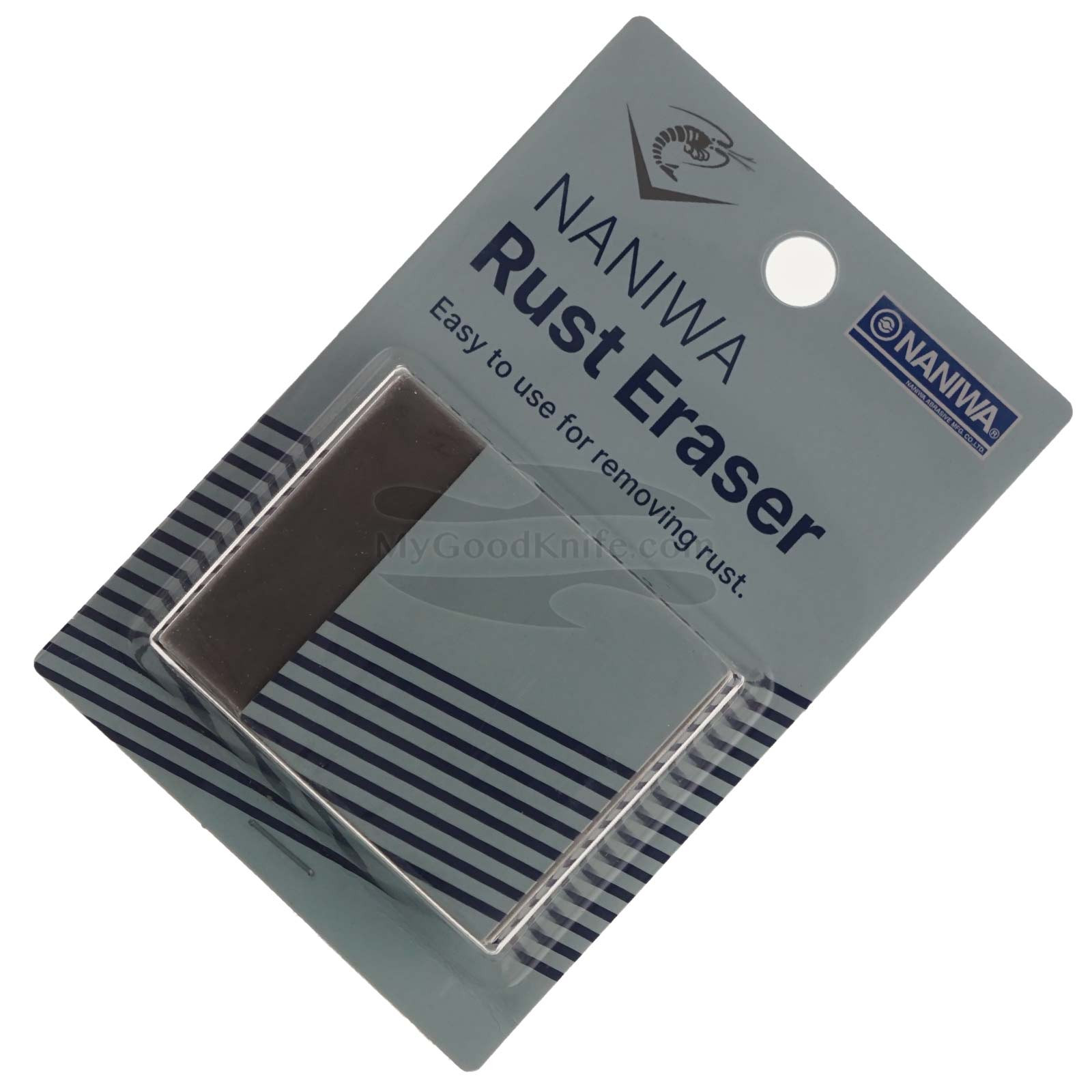
If corrosion does appear on a Japanese kitchen knife, it is not a problem. It is almost impossible to completely avoid oxidation processes. The main thing is to prevent rust from eating deep into the blade. At the initial stage of its appearance, corrosion can be easily removed with special erasers, such as Naniwa Rust Eraser. If you accidentally did not keep an eye on it and the rust has eaten deep enough, a special set for removing rust from knife blades will help.
Sharpening Damascus knives and restoring the Damascus pattern
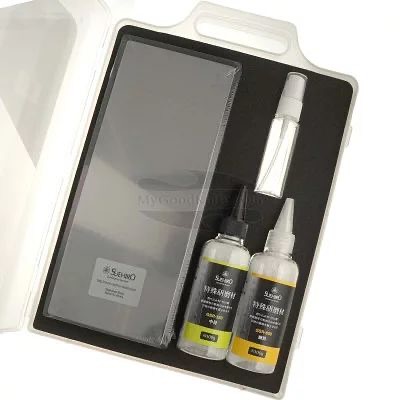
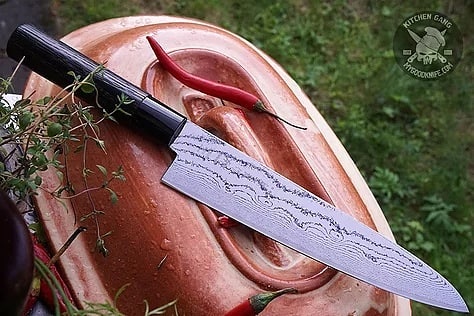
Many fans of Japanese damascus kitchen knives encounter an unpleasant phenomenon. When sharpening on water stones, the Damascus pattern naturally wears off on the stone and becomes less bright. This spoils the aesthetic appearance of a usually expensive Damascus knife. Fortunately, the structure of Damascus can be restored. One of the leading manufacturers of Japanese kitchen knives and accessories, Suehiro, has included in its range a special set for polishing and restoring the pattern of Damascus knives, Suehiro Dull / Glossy Finish Whetstone for Damascus knives. Of course, you can buy it in our store. However, it should be taken into account that the set is suitable for restoring the pattern of multi-layered real Damascus steel, and not decorative overlays that are often used in cheap knives.
Sharpen your Japanese kitchen knife regularly, take care of it and, of course, never wash it in the dishwasher. Then it will serve for many years and will be passed down from generation to generation. You can always buy the best Japanese kitchen knives and accessories for sharpening and care in the MyGoodKnife store.



 Christmas vacation 23.-28.12Read more
 Paracord: What It Is and How to Use ItRead more
 Can You Give Knives as a Gift: Traditions, Superstitions, and AdviceRead more
 How to Sharpen Japanese Knives – A Complete Guide to Care and MaintenanceRead more
 Delivery to USARead more