



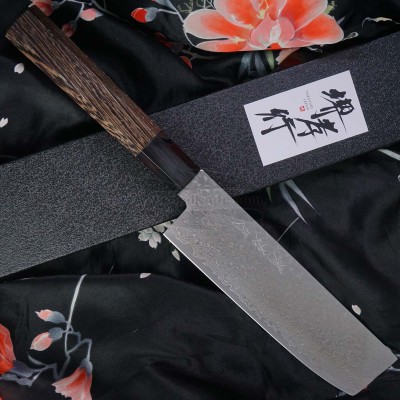


Nakiri Japanese kitchen knife Sakai Takayuki Ginga 7883 16.5cm
-
Quick shippingWe ship worldwide! If order is placed on business day before 12-00 at Finnish time, we will do our best to ship it on the same day.
-
Easy paymentMyGoodKnife offers several payment options for your purchase: credit card or direct payment to bank account.
-
Secure shoppingMyGoodKnife is secured with SSL (Secure Socket Layer) certificate. Our webshop is encrypted with 128-bit SSL protection. When you move to the payment pages, your payment transaction is completely secure!
-
Customers supportContact our customer service via live chat, e-mail or contact form. We do our best to answer all requests in nearest time.
-
Return & RefundEU customers have the right to cancel order within 14 working days of delivery and return goods for a full refund (except cost of shipment).The goods must be return in saleable (unused) condition including package.
The Japanese Nakiri Sakai Takayuki vegetable knife from the Ginga "Galaxy" series combines traditional craftsmanship and modern technology. The 165 mm blade is crafted from premium ZA-18 steel, renowned for its high carbon and chromium content, providing superior corrosion resistance and long-lasting edge retention. The blade core is encased in 69 layers of Damascus steel, creating not only strength and stability but also a beautiful, unique pattern reminiscent of a shimmering galaxy. The handle is crafted in the traditional Japanese wa style from dense wenge wood and features an elegant buffalo horn bolster. The knife is not dishwasher safe and should not be used as a cleaver. The nakiri is a chopping knife and is not suitable for use on hard foods.
- Reference
- 7883
- Brand
- Sakai Takayuki
- Country
- Japan
- Steel
- ZA-18
- Handle
- Wenge wood
- Blade Length, mm
- 165
- Total length, mm
- 290
Sakai Takayuki is a brand of high-quality Japanese kitchen knives produced in Sakai, Osaka Prefecture, one of Japan's key centers of knifemaking. The brand combines traditional hand-forging with modern technology, offering reliable and well-balanced knives in a variety of price points.
Sakai Takayuki's range includes kitchen knives made from popular VG10, Aogami (Blue Steel), and Ginsan steels, as well as models with a Damascus grain. These knives are suitable for both professional and home use. Order genuine Sakai Takayuki knives with worldwide delivery from MyGoodKnife.