In stock
Matsubara Hamono Knives
Matsubara Hamono is a Japanese knife workshop located in Omura City, Nagasaki Prefecture. The fourth generation of blacksmiths of the Tanaka family, headed by Katsuto Tanaka, continues the centuries-old tradition. In addition to master Katsuto, knives are also made by his son, Hiroki Tanaka, who represents the fifth generation of craftsmen.
There are 11 products.
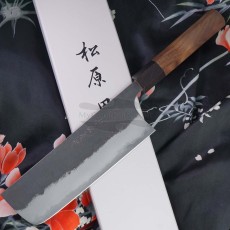
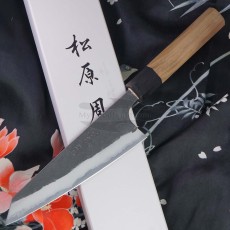
The blade is crafted from Japanese Shirogami #1 (White Steel No. 1) carbon steel, clad in stainless steel. Known for its high purity, Shirogami #1 allows for an exceptionally sharp edge and is easy to resharpen using water stones. Please note that the cutting edge is susceptible to corrosion and requires proper care: the knife must be wiped completely dry after each use. A black finish gives the blade a striking appearance. The octagonal handle is made of walnut, while the composite bolster—featuring Makassar ebony accented by a hard maple ring—creates a sophisticated, contrasting blend of natural woods.
In stock
In stock
In stock
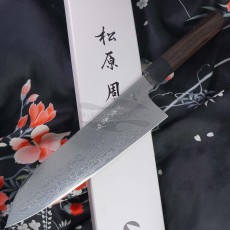
The core of the blade is forged from Japanese Aogami #2 (Blue Steel No. 2) carbon steel, laminated between layers of stainless steel. Aogami #2 contains tungsten and chromium, which enhance wear resistance and help the blade retain its sharpness for longer. This steel is easy to sharpen on water stones, allowing for the creation of a fine, aggressive cutting edge. While the stainless steel cladding protects the sides of the blade from corrosion and simplifies maintenance, the Aogami #2 cutting edge remains susceptible to rust; therefore, the knife must be washed and wiped completely dry after every use.
In stock
In stock
In stock
Sold out
Sold out
Sold out
Sold out
Matsubara Hamono craftsmen use traditional forging techniques. The brand is known for using high-quality steels, including Shirogami ("white paper") and Aogami ("blue paper"), as well as modern powder steels such as HAP-40 and ZDP-189.
Matsubara Hamono's range includes various types of Japanese kitchen knives, such as santoku, nakiri, gyuto chef's knife, petti and others. Most blades are made using sanmai technology, with a three-layer structure. This ensures the sharpness and durability of the cutting edge. The workshop continues to evolve, adapting to modern demands, for example, experimenting with new steels and designs.