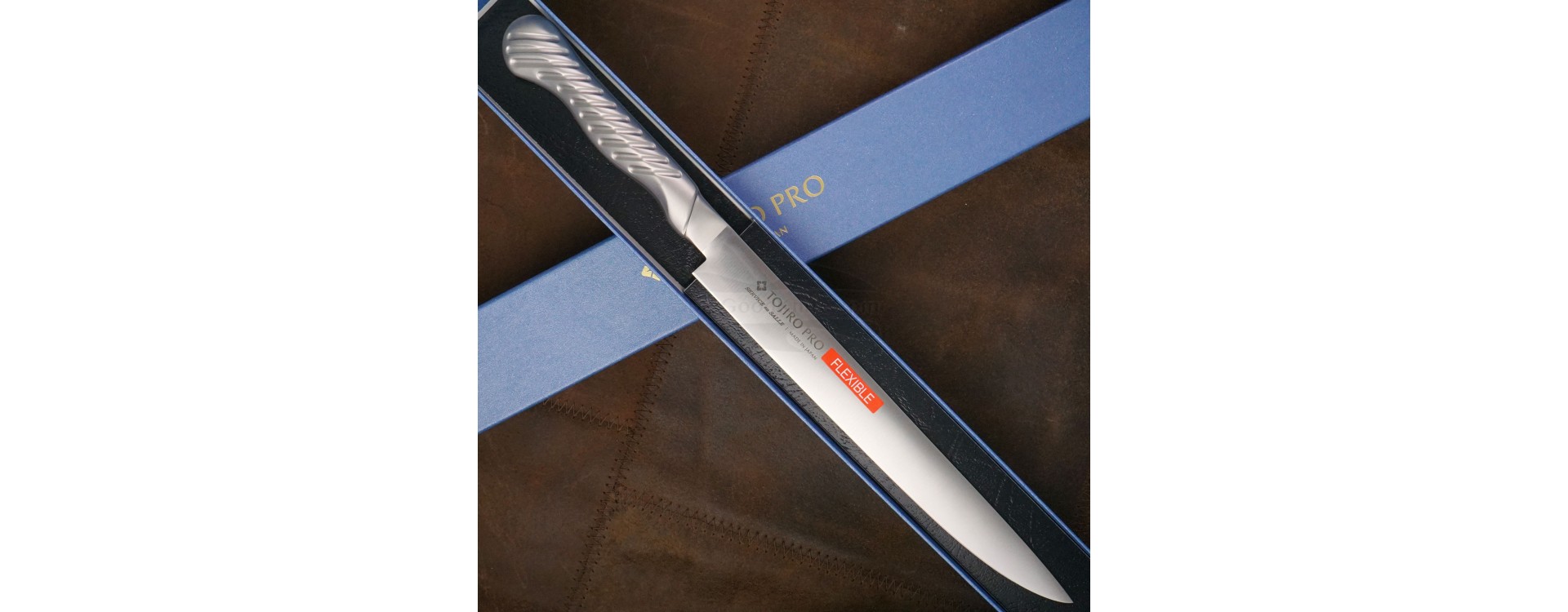
We continue our discussion of kitchen knives. We have already covered the purpose and benefits of vegetable knives, bread knives, utility knives, and of course, chef’s knives. Another category of kitchen knives found in almost every knife set and every manufacturer’s line is fillet knives and so-called slicers — knives for fine slicing.
Fillet knife.
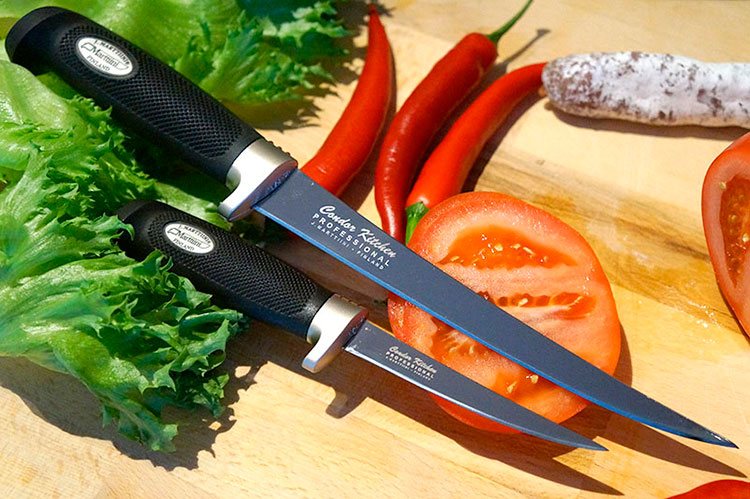
A good fillet knife should be flexible enough to separate thin, even slices of fillet from meat, fish, or poultry in a single smooth motion. The blade length can range from 10 to 34 centimeters, with the most versatile fillet knives usually having blades between 20 and 30 cm. The most flexible fillet knife in the world is considered to be the Tojiro Pro Filet de Sole — a knife designed to produce the thinnest possible fish fillets. Interestingly, Finland’s most popular knife manufacturer, Marttiini, offers the same fillet knife model both in its kitchen and fishing series. The only difference is that the fishing version comes with a sheath.
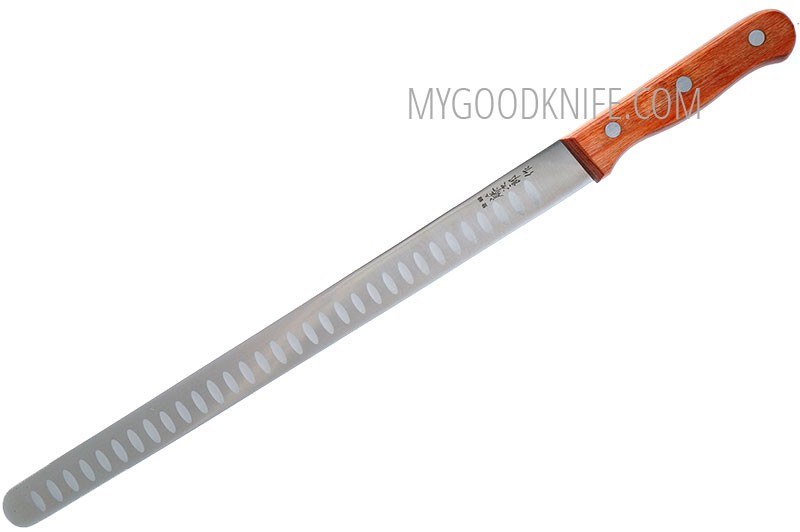
For large fish such as salmon, special fillet knives are used — typically with blades 30–35 cm long. Curiously, a Tojiro model with a rounded tip is marketed as a salmon knife, while European makers describe a knife of the same shape as a ham knife. In fact, the same model can be used for both. The blade of such a kitchen knife often features air pockets to prevent food from sticking.
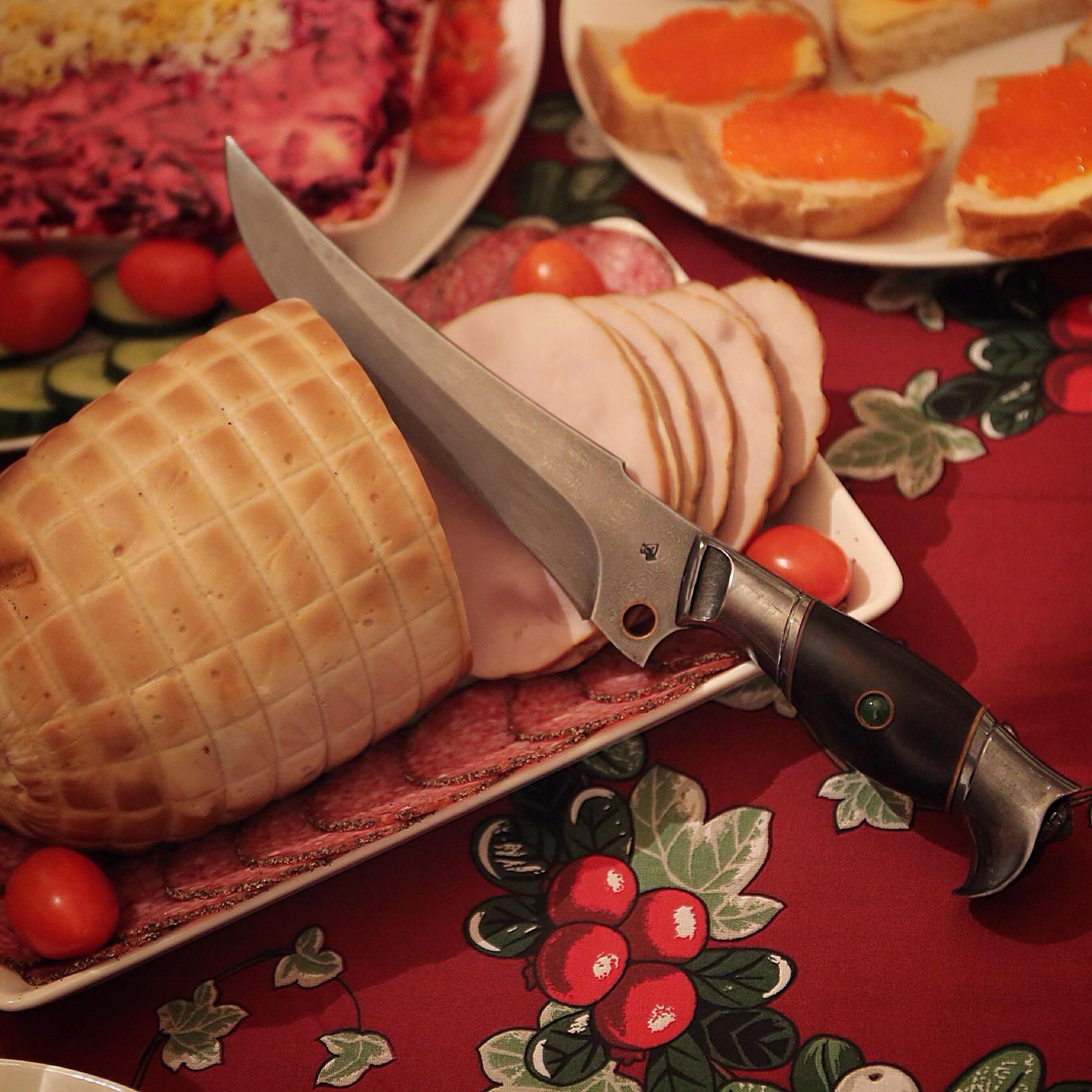
Fillet knives, however, are not only made for fish. Some European series, for example, include ham knives, designed for cutting jamón. The flexible blade allows you to carve thin slices of ham either toward yourself or away from yourself. Of course, you can use it to fillet other products too. In Finland, this type of knife is often used to carve the traditional Christmas ham — “kinkku.” The typical blade length of a ham knife is 25–30 cm.
Carving knife or Slicer.
The word slice literally means “a thin layer or piece.” That’s exactly what this knife is designed for — cutting thin, even slices. It’s a long and usually narrow knife with a stiff or slightly flexible blade, ranging from 20 to 45 cm in length. Ideally, the slicer’s blade should be long enough to complete a cut in one smooth motion. The classic slicer, found in most European kitchen knife collections, is a narrow knife with a rigid blade. The stiffness of the blade allows cutting both toward and away from yourself, using a pulling or sawing motion.
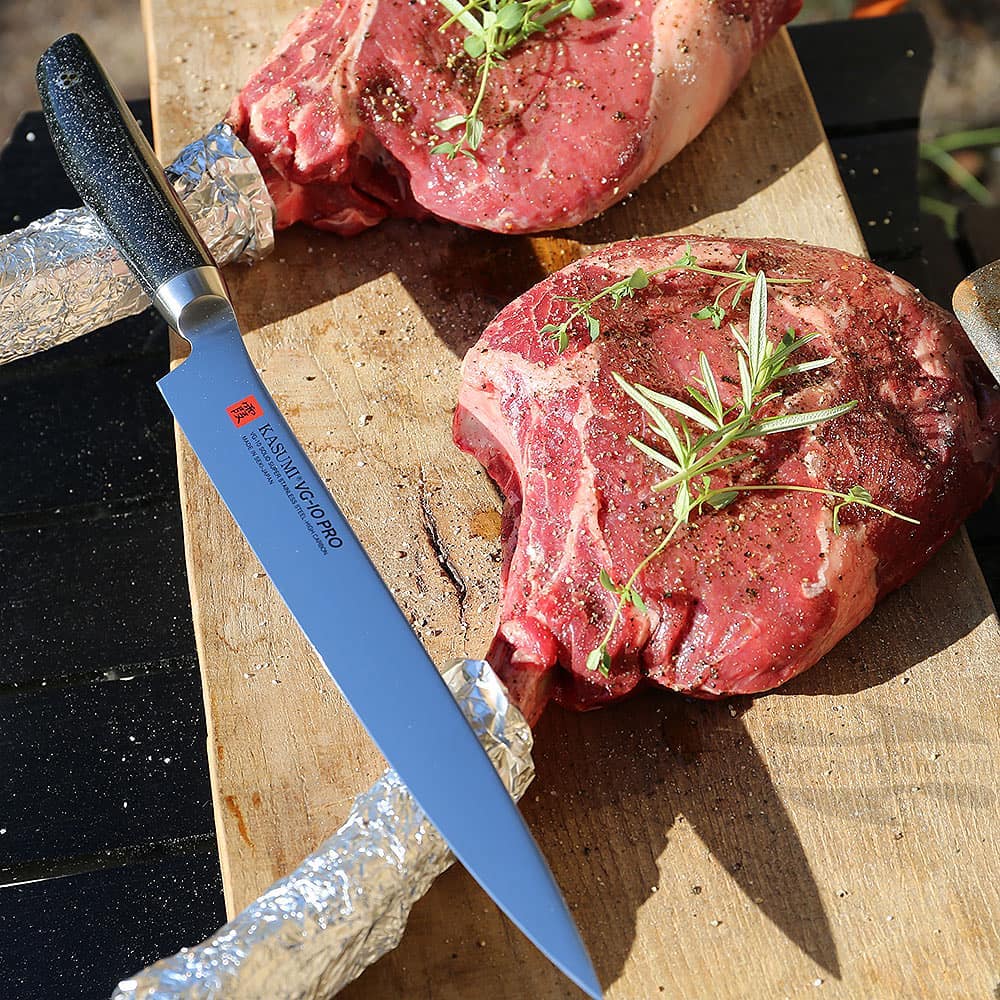
In English, a kitchen knife for thin slicing can also be called a carving knife or roast knife. This variety usually has a 20–25 cm blade and is often sold as part of a set with a special carving fork. Historically, such sets were used for carving roast beef right on the serving platter. These roast beef sets used to be quite expensive and beautifully designed. In the Russian Empire, such knives were even known by their French name — “trancher knives” (from trancher — “to cut”). Nowadays, roast carving sets make excellent gifts, though they tend to look simpler than those from the past century.
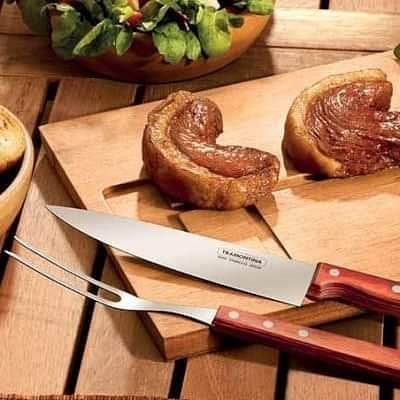
Japanese knife makers have their own version of the slicing knife — the Sujihiki. It has a distinctly triangular profile and a long, straight, sleek edge. Unlike European slicers, the Sujihiki has a thinner blade and is made from harder steel. The Japanese Yanagiba, traditionally used for preparing sashimi, is also often considered a type of slicer. But we will talk about Japanese knives separately.
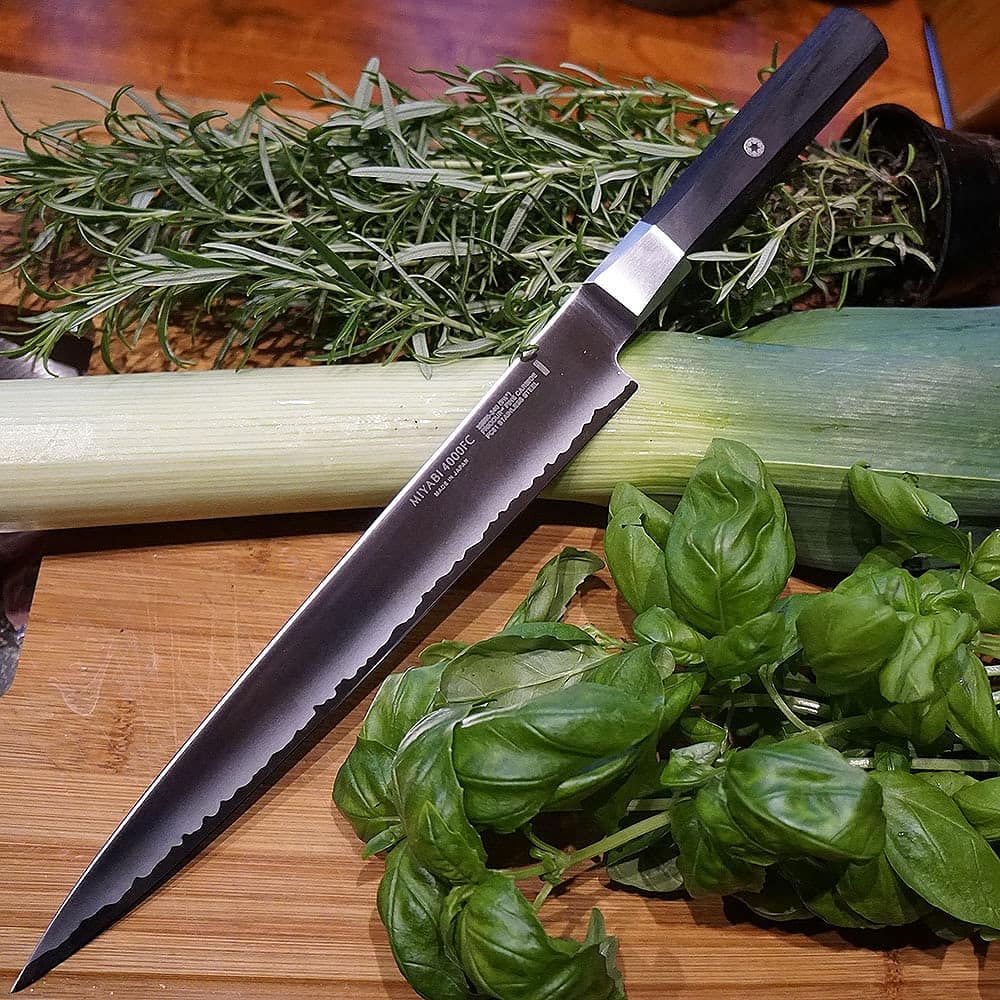
For now, let’s summarize.
Whether it’s called a slicing knife, carving knife, roast knife, Sujihiki, or gastronomic knife, all these are essentially knives for fine slicing. You might think slicers have been replaced by electric slicing machines or pre-sliced products available in stores. Yet traditional slicer knives remain indispensable in the kitchen — not only for their aesthetic results (imagine cutting a perfect slice of roast beef, just like in a restaurant!) but also for their convenience when slicing large pieces of food. And as for the fillet knife, there’s simply no true alternative to it. Generally speaking, flexible-bladed fillet knives are best for fish, while slicers are ideal for meat.
In the MyGoodKnife knife store, you’ll find the best fillet knives and slicers from world-renowned brands such as Zwilling, Kasumi, Tojiro, Miyabi, Yu Kurosaki, Seki Kanetsugu, Böker, and many others.



 Christmas vacation 23.-28.12Read more
 Paracord: What It Is and How to Use ItRead more
 Can You Give Knives as a Gift: Traditions, Superstitions, and AdviceRead more
 How to Sharpen Japanese Knives – A Complete Guide to Care and MaintenanceRead more
 Delivery to USARead more